No policy change has confused California solar shoppers more than NEM 3.0. Door-knockers use it to create panic; skeptics use it to claim solar is dead. Both are wrong. Here's what actually changed, who it applies to, and how well-designed systems still beat the utility decisively.
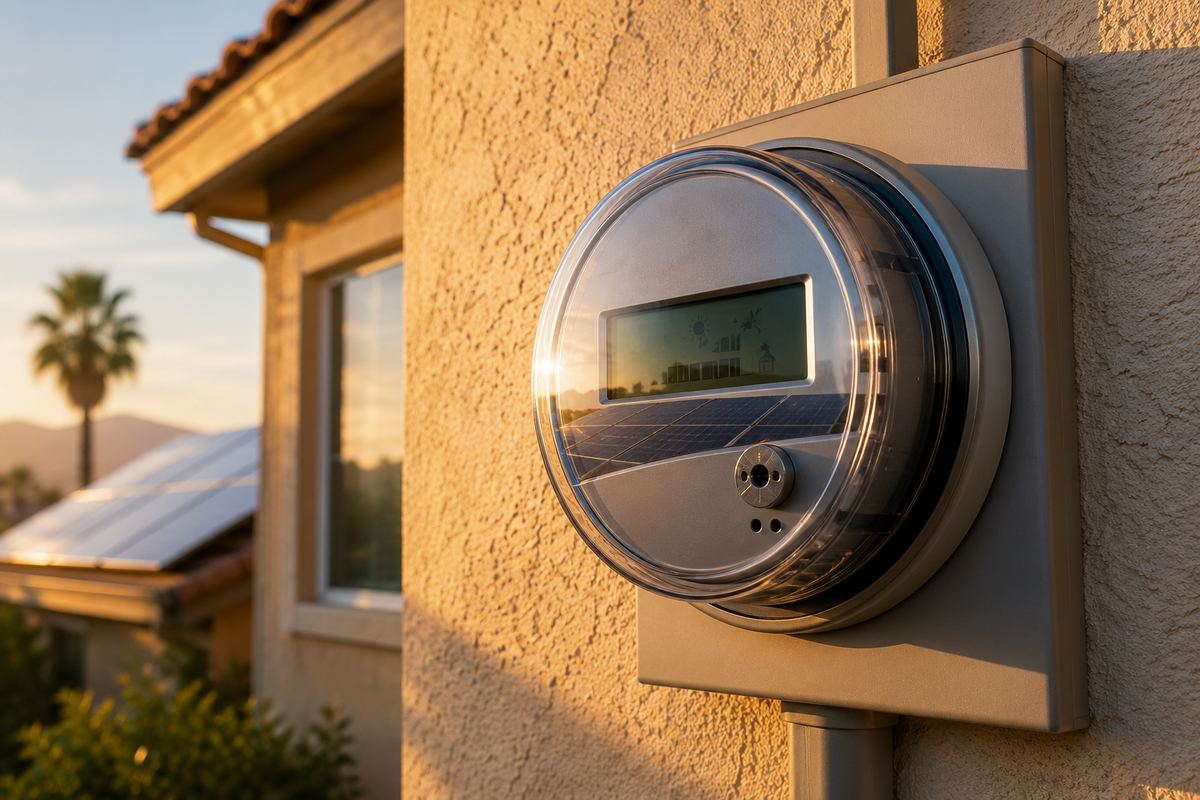
From net metering to net billing
Under the old NEM 2.0 rules, every kilowatt-hour your panels exported to the grid earned a credit at nearly the full retail rate. Export a kWh at noon, buy one back at 8pm, pay roughly nothing. Simple.
Since April 2023, new solar customers of PG&E, SCE, and SDG&E are on the Net Billing Tariff — NEM 3.0. The key change: exports are credited at the utility's "avoided cost," which varies by hour and averages about 75% less than retail. Meanwhile, every kWh you consume directly from your own system is still worth full retail — because it's a kWh you never bought.
The one-sentence summary: NEM 3.0 didn't make solar power less valuable — it made exporting solar power less valuable. Self-consumption is the new game, and batteries are how you play it.
Why batteries change everything
A typical home uses the least power exactly when panels produce the most (midday) and the most power when panels produce nothing (evening). Without storage, that midday surplus gets exported at low credit values.
A battery flips the math:
- Midday surplus charges your battery instead of exporting at ~25% value.
- From late afternoon, your home runs on stored solar during the utility's most expensive hours — when grid power can cost 50–60¢/kWh on time-of-use plans.
- Each stored kWh is effectively worth 3–4× what an exported one earns.
- Bonus: you're protected from outages, and California's SGIP program rebates part of the battery cost.
What the numbers look like now
| System type | Typical bill offset | Typical payback* |
|---|---|---|
| Solar only (NEM 3.0) | 60–75% | 8–12 years |
| Solar + battery (NEM 3.0) | 80–95%+ | 6–10 years |
| Solar under municipal utility rules (e.g. LADWP) | 75–95% | 6–10 years |
*Ranges reflect typical ENP America designs at current rates; your roof, usage pattern, and rate plan drive your actual numbers.
Who NEM 3.0 does NOT apply to
- Existing NEM 1.0/2.0 customers keep their legacy terms for 20 years from interconnection.
- Municipal utility customers — LADWP, SMUD, Pasadena, Burbank, Glendale and others set their own rules, several still closer to traditional net metering.
Designing to win under NEM 3.0
Good 2026-era system design in IOU territory looks like this:
- Size solar to your real annual usage — oversizing to farm export credits no longer pays.
- Add storage sized to your evening load — typically one battery; two for large homes, EVs, or whole-home backup.
- Pick the right rate plan — the utilities' solar-specific TOU plans reward exactly this setup.
- Set battery priorities — savings mode most days, storm-watch reserve when weather threatens.
The bottom line
NEM 3.0 raised the bar for lazy system design and lowered it for good engineering. Utilities' retail rates keep climbing; the gap between what you pay them and what your roof can produce keeps widening. See what a battery-first design does for your home with our instant estimator — toggle "battery" on and watch the numbers move.