Five years ago a home battery was a luxury add-on. In 2026 California, it's usually the difference between a good solar investment and a great one — and between sitting in the dark during a shutoff and not noticing it happened. Here's everything a homeowner should know before buying storage.
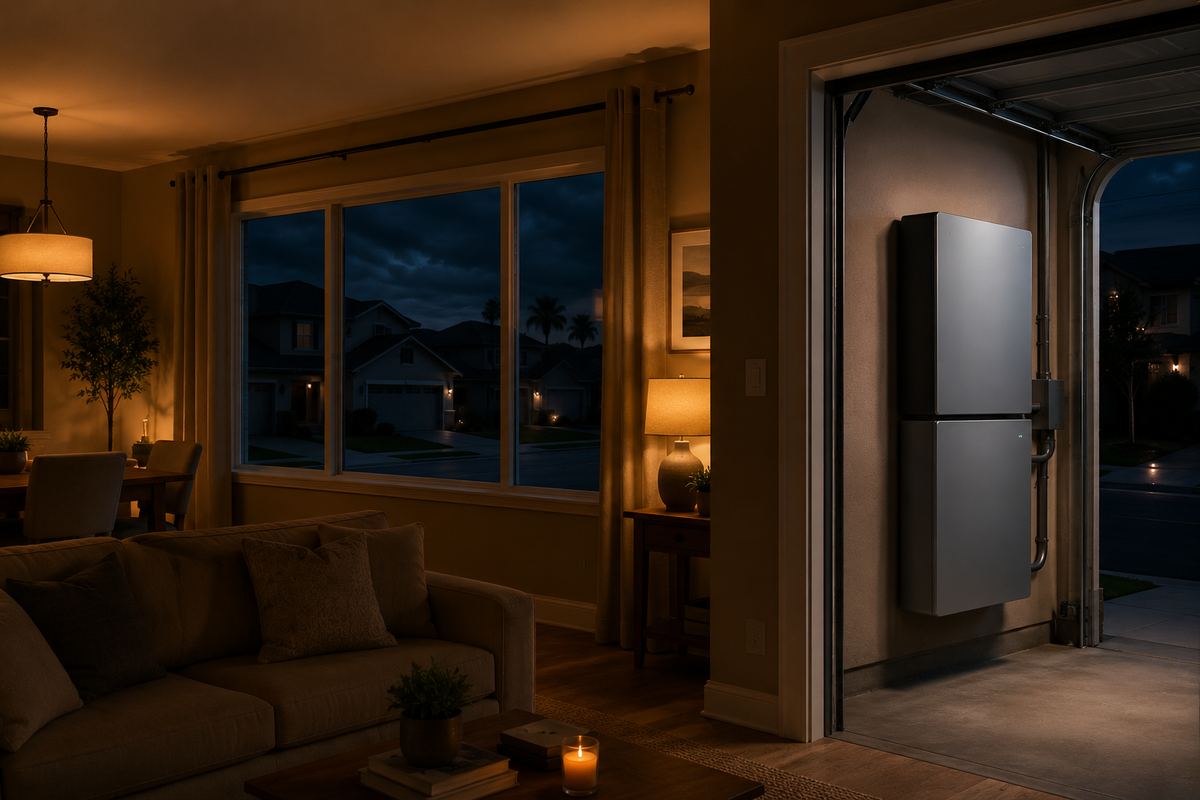
What a home battery actually does
Three jobs, all automatic:
- Time-shifting: stores your midday solar surplus and powers your home through expensive evening hours — the core of NEM 3.0 savings strategy.
- Backup power: when the grid fails, the battery takes over in milliseconds. Paired with solar, it recharges daily and can ride out multi-day outages.
- Rate arbitrage: even without solar, a battery can charge when grid power is cheap and discharge when it's expensive.
Sizing: what do you want to keep running?
| Goal | Typical capacity | What stays on |
|---|---|---|
| Essentials backup | 10–14 kWh (1 battery) | Fridge, lights, Wi-Fi, outlets, garage door |
| Comfort backup | 20–27 kWh (2 batteries) | Essentials + well pump or AC in moderation |
| Whole-home | 27–40+ kWh | Everything, including central AC (load management helps) |
Most ENP America customers choose one battery for savings plus essentials backup; households with medical equipment, home offices, or frequent PSPS shutoffs often choose two.
What it costs — and what California pays you
Installed prices for a quality 10–14 kWh battery generally run $10,000–$16,000, driven by capacity, whether it's added during the solar install (cheaper) or retrofitted, and panel-upgrade needs.
The SGIP rebate offsets a meaningful chunk: roughly $150/kWh (about $1,500–$2,500) for general-market customers, and up to several times that for the equity and equity-resiliency tiers — households in Tier 2/3 fire-threat districts, those who've experienced repeated shutoffs, or those enrolled in income-qualified energy programs. In equity-resiliency cases the rebate can approach the full cost of the battery.
Note on federal incentives: the 30% residential tax credit for purchased batteries ended December 31, 2025. Lease/PPA structures can still capture federal credits — see our 2026 incentives guide.
Battery day-to-day: what owners actually experience
- Nothing, mostly. The battery follows its schedule silently; the app shows charge level and flows.
- Outages become non-events. The switchover is faster than a blink — clocks don't even reset.
- Storm watch: before forecast severe weather or planned shutoffs, the battery automatically charges to full and holds reserve.
- Zero maintenance. No fluids, no fumes, no startup — unlike a generator, plus no fuel to store.
Battery vs. generator
| Home battery + solar | Standby generator | |
|---|---|---|
| Fuel | Sunshine (free, self-replenishing) | Natural gas / propane (ongoing cost) |
| Switchover | Milliseconds | 10–30 seconds |
| Noise / emissions | Silent, zero | Loud, exhaust |
| Daily value | Saves money every single day | Only useful in outages |
| Incentives | SGIP rebate | None |
Is a battery right for you?
Storage is most compelling if any of these apply:
- You're a PG&E, SCE, or SDG&E customer going solar under NEM 3.0 (it transforms your payback);
- You've experienced PSPS shutoffs or live in a high fire-threat area (and may qualify for outsized SGIP rebates);
- Someone in your home relies on powered medical equipment or works from home;
- You're on a steep time-of-use plan with expensive evenings.
Toggle "battery" in our instant estimator to see solar-plus-storage numbers for your home, or ask an advisor whether you land in an enhanced SGIP tier.